Crypto traders often believe they act rationally, but the truth is, human decision-making is full of hidden psychological traps. These cognitive biases influence how traders interpret charts, react to news, and manage risk. In volatile markets like crypto, even a small emotional mistake can lead to major losses. Understanding these biases is the first step toward eliminating them, and automation is the key to staying objective.
Cognitive biases such as FOMO, confirmation bias, loss aversion, and overconfidence distort traders’ decisions in crypto markets. Recognizing these mental shortcuts helps improve discipline, and using automated bots reduces emotional mistakes.
What Are Cognitive Biases in Crypto Trading?
Cognitive biases are mental shortcuts that influence how we perceive information and make decisions. In crypto, where markets move fast and emotions run high, these biases can derail even well-planned strategies.
They affect:
- When traders enter or exit a position
- How they interpret market trends
- Their reaction to losses or gains
- Risk-taking behavior
The Most Common Cognitive Biases in Crypto Trading
1. Confirmation Bias
Traders seek information that confirms what they already believe and ignore information that contradicts it.
Example: A trader bullish on XRP only follows influencers who predict major pumps, ignoring bearish technical signals.
Impact: Leads to holding losing positions far too long.
2. FOMO (Fear of Missing Out)
One of the strongest emotional triggers in crypto. FOMO makes traders buy impulsively when prices spike.
Example: ETH pumps 15% in one hour, and a trader buys the top, driven by hype on X/Twitter.
Impact: FOMO usually results in entering at the worst possible time.
3. Loss Aversion
The pain of losing feels stronger than the joy of winning. Traders avoid taking small losses, allowing them to grow into large ones.
Example: A position drops -20%, yet the trader refuses to exit because “it will recover.”
Impact: Massive drawdowns and blown accounts.
4. Overconfidence Bias
After a few successful trades, traders believe they can’t be wrong and take unnecessary risks.
Example: A trader increases leverage to 20x after two profitable days.
Impact: Increased likelihood of liquidation.
5. Anchoring Bias
Fixating on a specific price level, even if market conditions change.
Example: A trader believes BTC “must return to $70k” because it was the previous ATH.
Impact: Misaligned expectations and poor strategy execution.
6. Recency Bias
Recent market events feel more important than long-term patterns.
Example: A trader expects an uptrend to continue just because the last 48 hours were green.
Impact: Poor interpretation of long-term structure.
7. Mentality
Following what everyone else is doing, even when it goes against logic.
Example: Buying altcoins because they’re trending on TikTok.
Impact: Entering bubbles and hype cycles too late.
How Automation Helps Reduce Cognitive Biases
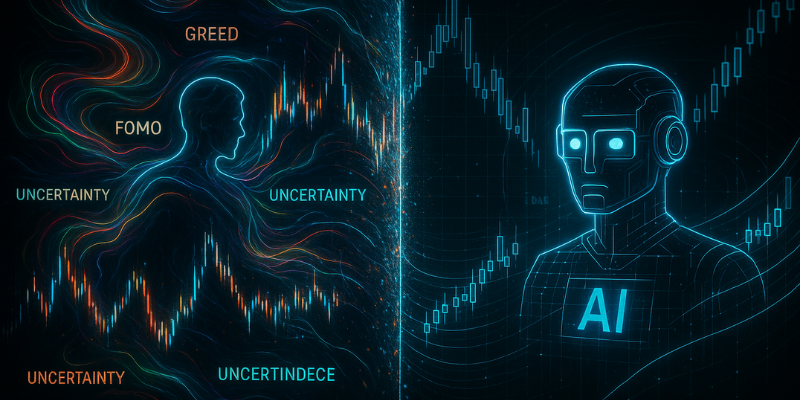
Trading bots like Junglebot eliminate emotional interference by executing rules with complete objectivity.
- Bots Don’t Feel FOMO
They enter trades based on signals, not hype cycles. - Bots Apply Stop-Loss and Take-Profit Automatically
No hesitation. No fear. Only discipline. - Bots Follow Strategy Logic 24/7
They don’t second-guess decisions or get attached to positions. - AI Bots Adjust to Market Conditions
Instead of being anchored to outdated price targets, AI systems adapt dynamically. - Data-Driven Decisions Replace Emotional Judgment
Bots evaluate trends, volatility, and indicators with zero bias.
Result: A trading system that acts consistently, even when humans would panic.
How Traders Can Overcome Cognitive Biases (Practical Tips)
- Set Rules Before You Trade
Define your entry, exit, and risk levels upfront. - Use Automation Where Possible
Let bots enforce discipline, especially for stop-loss and take-profit. - Track Your Emotional Triggers
Write down moments when you felt fear, greed, or doubt. - Avoid Overtrading
More trades ≠ more profits. Overtrading is usually emotional. - Review Trades Objectively
Analyze performance by data, not feelings. - Trust the Strategy, Not Your Mood
Emotions change by the minute; strategies shouldn’t.
Final Thoughts
Cognitive biases are invisible forces shaping every trading decision. In the crypto market, fast, emotional, and unpredictable, these biases can be devastating if ignored. By understanding how the mind influences trading and using automated tools like Junglebot, traders can remove emotional errors and act with true discipline.